
Guidance
The documents needed to bring a loved one home to Nigeria
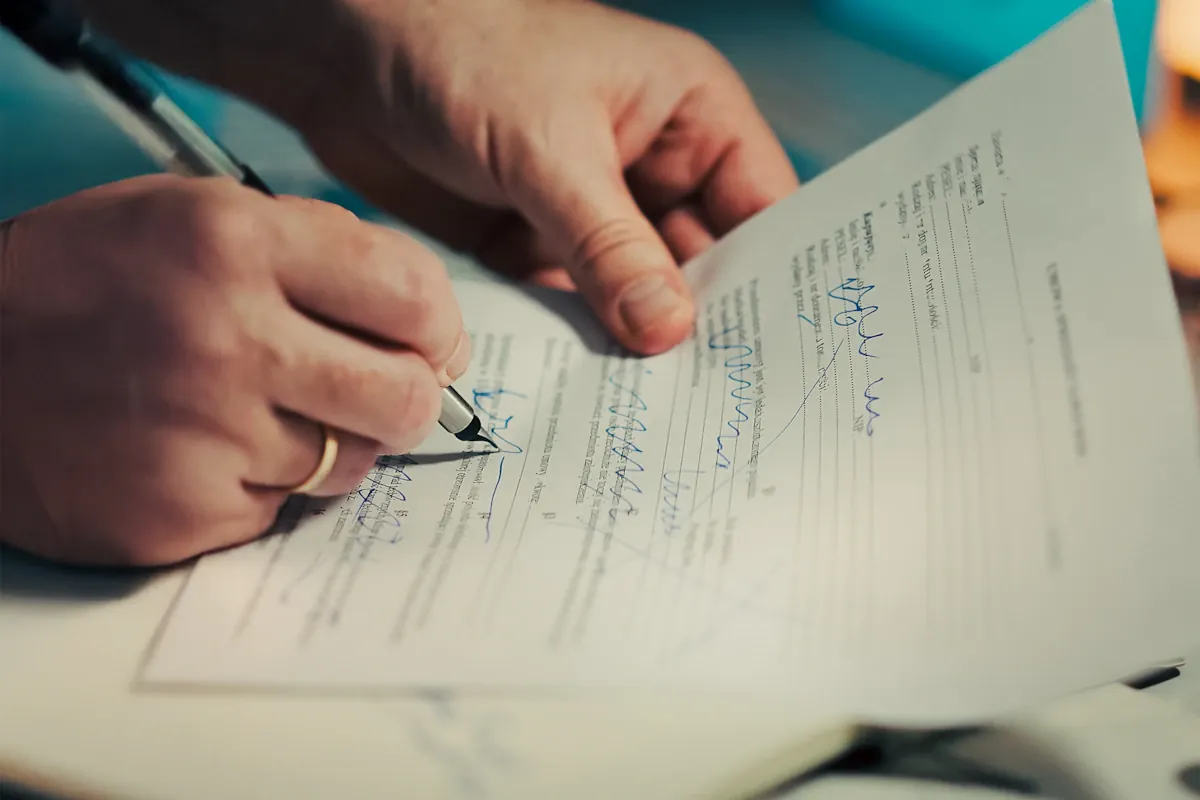
When someone passes away abroad, one of the first questions families ask is what paperwork is required to bring them home. It is a fair question, and an answer that brings calm rather than confusion makes a hard moment a little easier. This article gives a general overview of the documents usually involved in repatriation to Nigeria. It is a starting point, not a substitute for confirmation, because exact requirements can vary with the country your loved one is travelling from and the state they are coming home to.
The documents at a glance
These are the documents most repatriations to Nigeria involve. Each is explained below.
- Death certificate, issued in the country where the person passed away
- Certified translation, where the certificate is not in English
- Embalming certificate
- Free-from-infectious-disease certificate
- Sealing certificate, where the casket is sealed for transport
- Passport of the deceased, or a certified copy
- Consular or embassy authorisation
- Airway Bill, issued by the airline when the flight is booked
The foundational document
Most repatriations involve a death certificate issued in the country where the person passed away. This is the foundational document, confirming the death officially, and almost everything else is built around it. Where the certificate is in a language other than English, a certified translation is often required so that authorities on the Nigerian side can read it without ambiguity.
The certificates of preparation
Alongside the death certificate, an embalming certificate is usually needed. This confirms that the body has been prepared for international transport by a qualified professional. A free-from-infectious-disease certificate, sometimes called a non-contagious disease certificate, is also commonly requested, confirming that the deceased did not have a condition that would pose a risk during transit. Where the coffin or casket is sealed for transport, a sealing certificate may be issued to confirm this was done correctly.
Identity and permission to travel
The passport of the deceased, or a certified copy, ties the documentation to the person's identity and nationality. For repatriation to Nigeria, authorisation from the Nigerian embassy or consulate in the sending country is frequently part of the process. This is the step where the receiving country formally permits the remains to be brought in, and it is worth starting early, as consular steps can take time.
The document that travels with them
Once the funeral home abroad books the flight, the airline issues an Airway Bill. This is the cargo document that travels with the remains and is essential for clearance on arrival. The flight and cargo information attached to it tells the receiving team when and where to be, and under which reference to collect.
Why we do not hand you a fixed checklist
Requirements are not identical everywhere. Some states in Nigeria, or some airports of arrival, may ask for additional documentation, and the exact list can change. For that reason we do not present a single fixed checklist as if it were universal. What we do is review what has already been prepared on the sending side, identify what is still needed on the Nigerian side, and tell you clearly and in plain language what to gather, so nothing is discovered missing at the airport.
If you are at the very start of this and feeling overwhelmed by the list, that is understandable. You do not have to assemble all of this alone or from memory. Reach out and we will walk through your specific situation, confirm what applies to the country and the state involved, and coordinate the Nigerian side with you and the funeral home abroad.
More guidance for families

The Process
What happens at the airport: how cargo clearance works on arrival
From the moment the flight lands to the moment your loved one leaves the airport, here is a calm walk-through of what cargo clearance in Nigeria involves.
5 min read
For Funeral Homes
A guide for funeral homes abroad partnering with a Nigeria-side service
For funeral directors handling a repatriation to Nigeria: how a dedicated Nigeria-side partner shares the work, and what helps the handover go smoothly.
6 min read
Guidance
What families can expect in the first days after a loss abroad
A gentle guide to the first steps when a loved one passes away overseas, and how repatriation to Nigeria usually begins.
5 min read
We are ready to help you bring them home.
Reach out whenever you are ready. A member of our team will respond with care, and there is no obligation in making contact.